Article
Abjection in Alien: The Eighth Passenger
Giger's Xenomorph read through abjection: how Alien turns bodily invasion, birth and disgust into a grammar of horror.
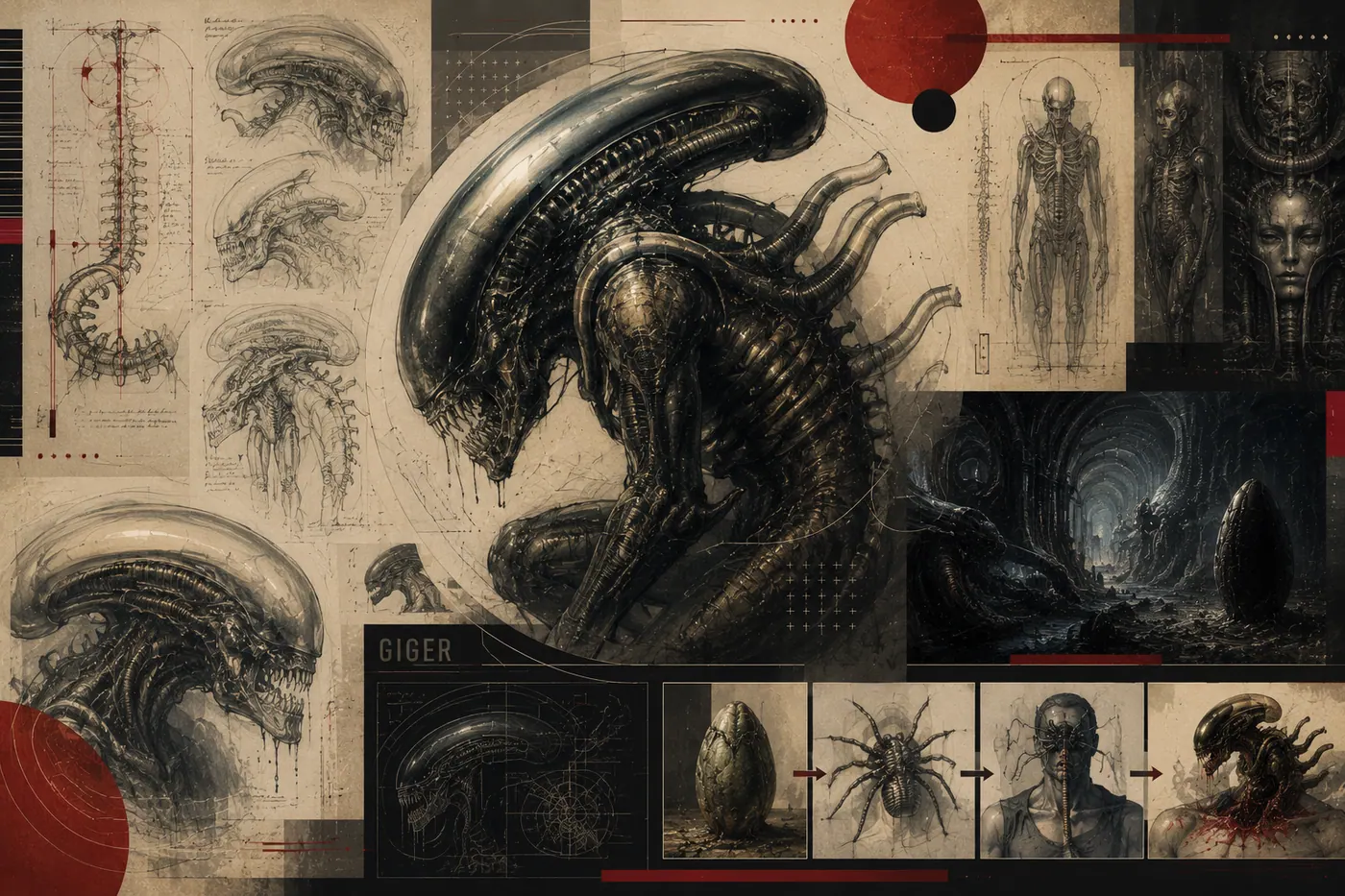
Ridley Scott’s Alien turns extraterrestrial horror into a problem of the body. The Xenomorph frightens because it kills, but also because it breaks the limits that keep identity stable: inside and outside, human and animal, birth and death, desire and disgust.
Julia Kristeva’s idea of abjection helps explain the creature’s power. The abject is what must be expelled so the subject can imagine itself as clean, whole and separate. Alien returns that rejected matter in the form of fluids, openings, gestation and invasion.
Giger’s design makes the monster both organic and mechanical, erotic and cadaverous. The alien lifecycle turns reproduction into violation and the body into a corridor through which something foreign passes. Horror is not outside the human; it erupts from within.
The film’s lasting force lies in that ambiguity. The Xenomorph is a cosmic creature, but it is also the image of a body that no longer belongs to itself. In that loss of bodily sovereignty, Alien finds one of the most disturbing forms of modern fear.
Readers
Would you like to comment on this essay or suggest a related reading?
Write to us at info@cinetropo.com.