Article
Between Endless Banality and Unthinkable Terror
Susan Sontag's The Imagination of Disaster as a lens for 1950s science-fiction cinema.
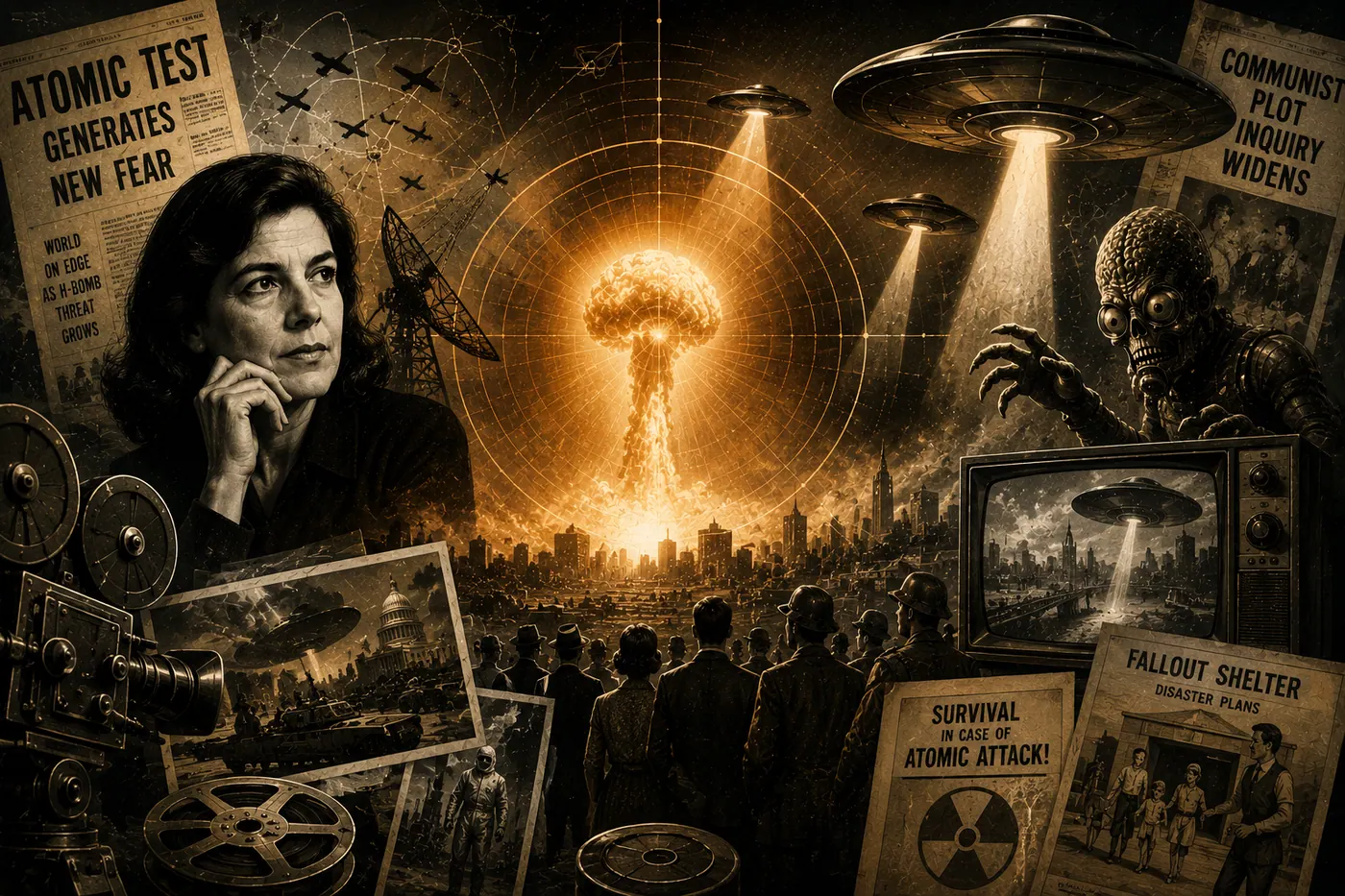
Susan Sontag saw in 1950s science fiction a cinema caught between formula and catastrophe. Its plots could be repetitive, almost banal, but the fantasies they organized were immense: atomic destruction, invasion, mutation and the end of the world.
That contradiction matters. The films domesticated collective fear by turning it into spectacle. Flying saucers, giant insects and irradiated monsters gave shape to anxieties that were otherwise difficult to name in everyday language.
The genre’s apparent simplicity was part of its social function. It transformed the Cold War, nuclear panic and suspicion of the neighbour into images that audiences could consume, fear and then leave behind.
For Cinetropo, Sontag’s reading remains useful because it shows that these films were not naive escapism. They were rituals of disaster, small theatres where modern societies rehearsed their own possible disappearance.
Readers
Would you like to comment on this essay or suggest a related reading?
Write to us at info@cinetropo.com.