Article
The Extraterrestrial in the Soviet Cold War Context: Ikarie X-B 1
Soviet science-fiction cinema during the Cold War, centred on Jindrich Polak's Ikarie X-B 1.
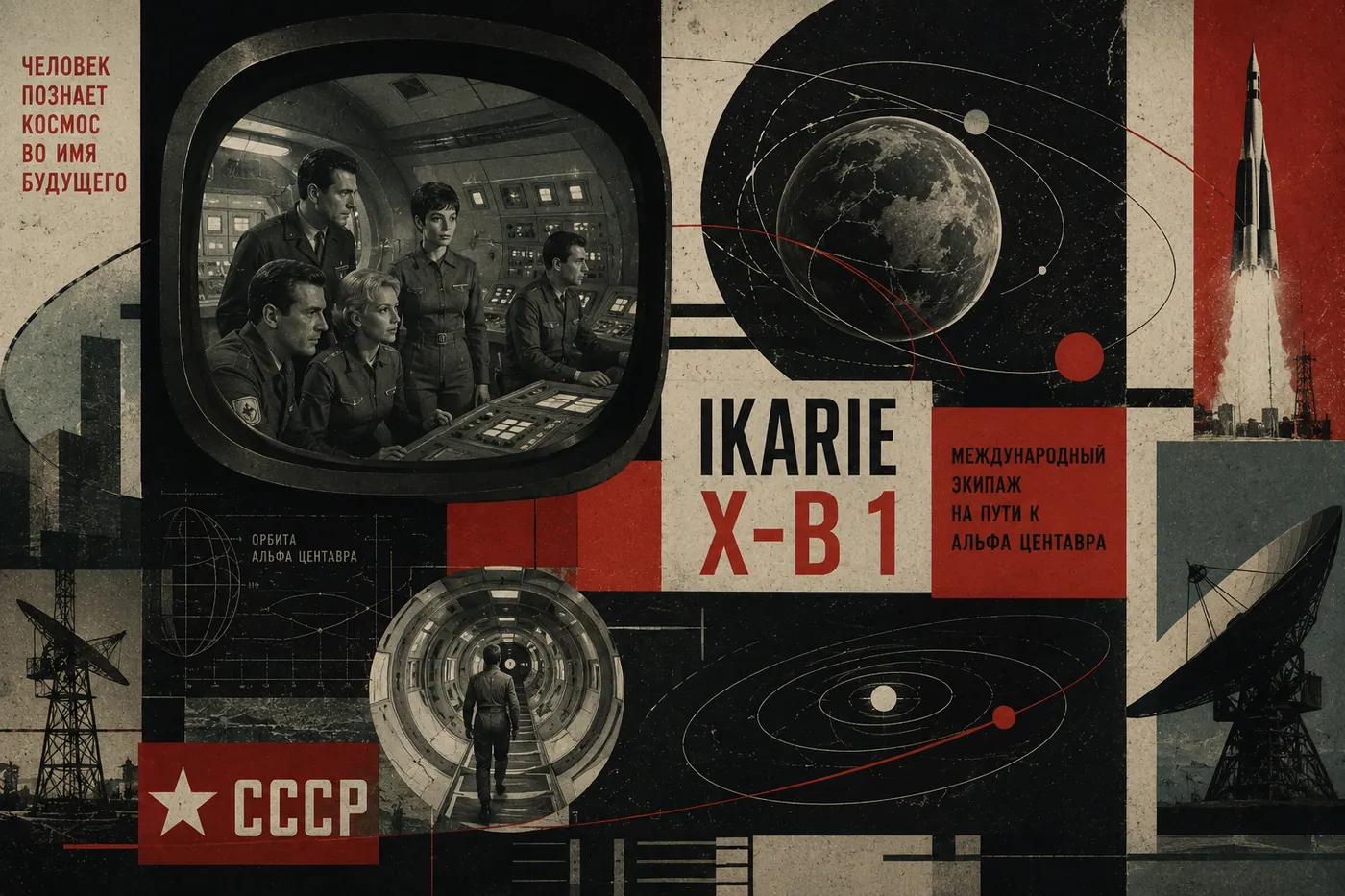
Ikarie X-B 1 belongs to a Cold War science-fiction tradition that imagined space not only as conquest but as collective destiny. Its future is disciplined, rational and communal, far removed from the individual heroics of many Western adventures.
The extraterrestrial question is present as a horizon. Space travel becomes a test of social organization: how a crew thinks, works and endures together when Earth is no longer the centre of experience.
The film’s tone is unusually serious. It treats technology with confidence but not with spectacle. The voyage is philosophical, political and emotional, shaped by the hope that another kind of humanity might be possible.
Seen today, Ikarie X-B 1 offers an alternative genealogy of the alien imagination. It reminds us that science fiction was also a field where competing futures, and competing ideas of the human, were projected.
Readers
Would you like to comment on this essay or suggest a related reading?
Write to us at info@cinetropo.com.