Article
The Two Versions of The Thing
Hawks's 1951 version as an allegory of McCarthyism, Carpenter's 1982 film as a study of paranoia.
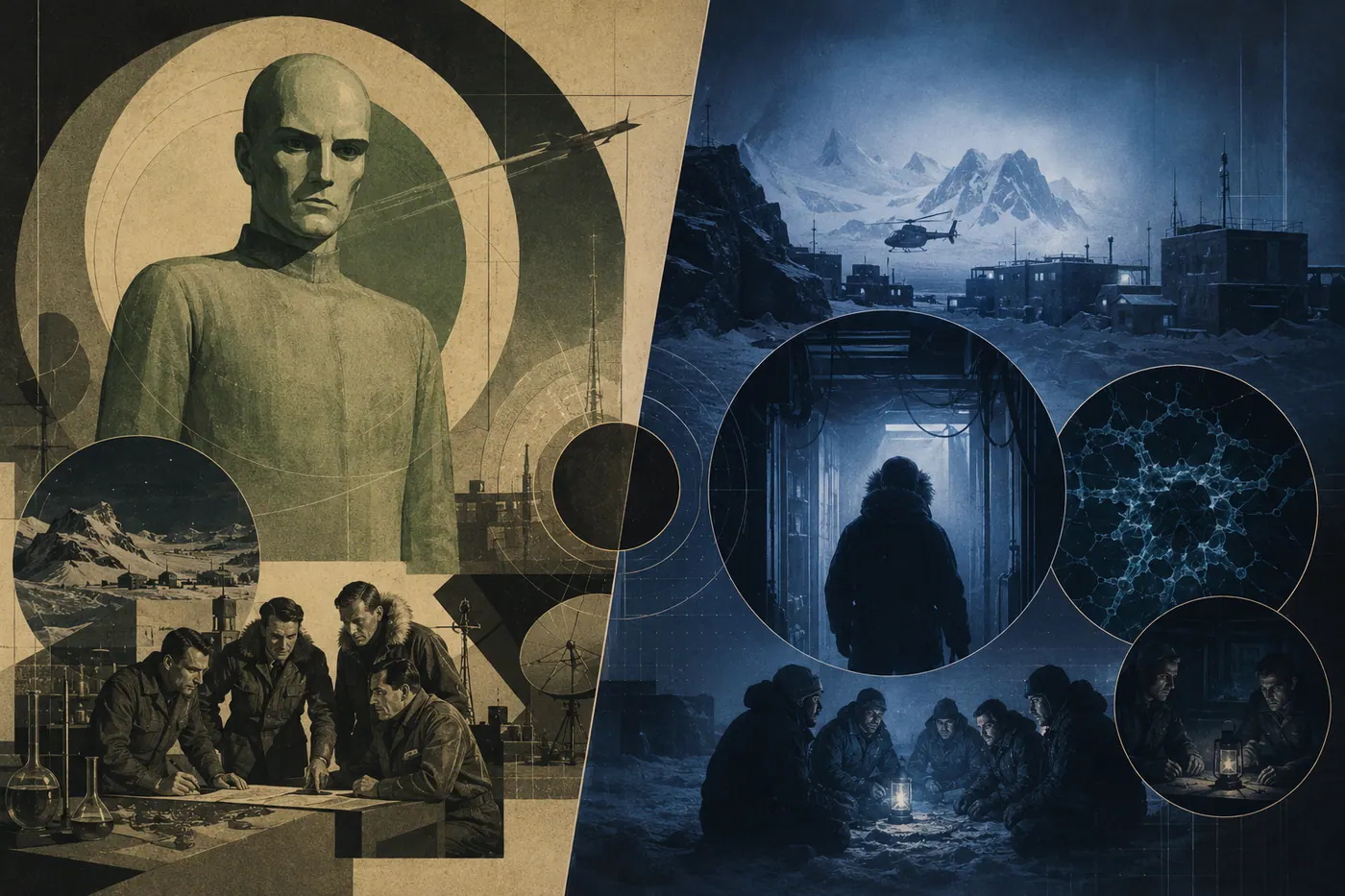
The two great film versions of The Thing reveal how the same premise can express two very different historical fears. In 1951, the alien body is an external enemy that must be contained by discipline, science and military order.
Hawks’s version belongs to the cultural atmosphere of early Cold War America. The monster is foreign, threatening and legible. Its danger strengthens the community because it allows the group to define itself against a visible outside.
Carpenter’s 1982 film destroys that confidence. The enemy is no longer outside the group; it may already be inside any body. Paranoia becomes structural because the signs of identity can be perfectly copied.
Between the two films lies a shift from invasion to contamination. The alien ceases to be a hostile visitor and becomes a crisis of trust. The question is not how to defeat the monster, but how to know whether the person beside us is still human.
Readers
Would you like to comment on this essay or suggest a related reading?
Write to us at info@cinetropo.com.