Article
The Alien as a Mirror of Ourselves
Why do extraterrestrials fascinate us? The answer has less to do with outer space than with what we hesitate to say about ourselves.
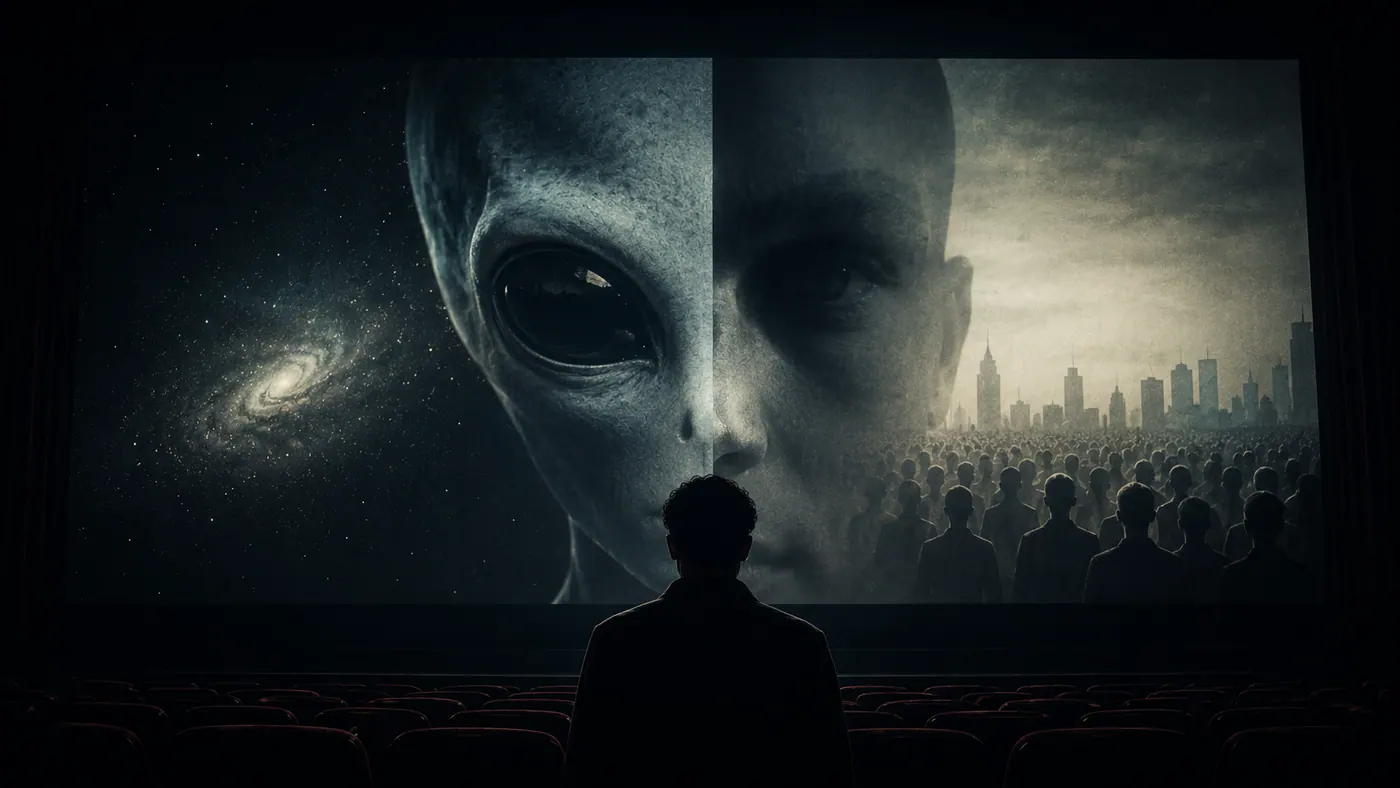
One idea runs through What are aliens for?: An Essay on Cinema and the Extraterrestrial Imagination: screen aliens have never spoken only about outer space. They have spoken about us, about our borders, our fears, what we silence and what we project onto others in order not to recognize it as our own.
The alien works as an uncomfortable mirror. Through allegory, cinema can say what would be politically, morally or emotionally difficult to say directly. The non-human other helps define what a culture believes the human to be.
Every creature that arrives from space draws a boundary. Sometimes it represents the enemy, sometimes the saviour, sometimes the monstrous body, sometimes the future we desire or fear. In all cases, it reveals the society that imagines it.
To study extraterrestrials in cinema is therefore to study the changing outline of humanity. The alien is not the opposite of us. It is one of the forms we have invented to look at ourselves from outside.
Readers
Would you like to comment on this essay or suggest a related reading?
Write to us at info@cinetropo.com.