Article
Soviet Science-Fiction Cinema: Tarkovsky's Answer to Kubrick
How Andrei Tarkovsky shaped a poetic, metaphysical alternative to Western science fiction in Solaris and Stalker.
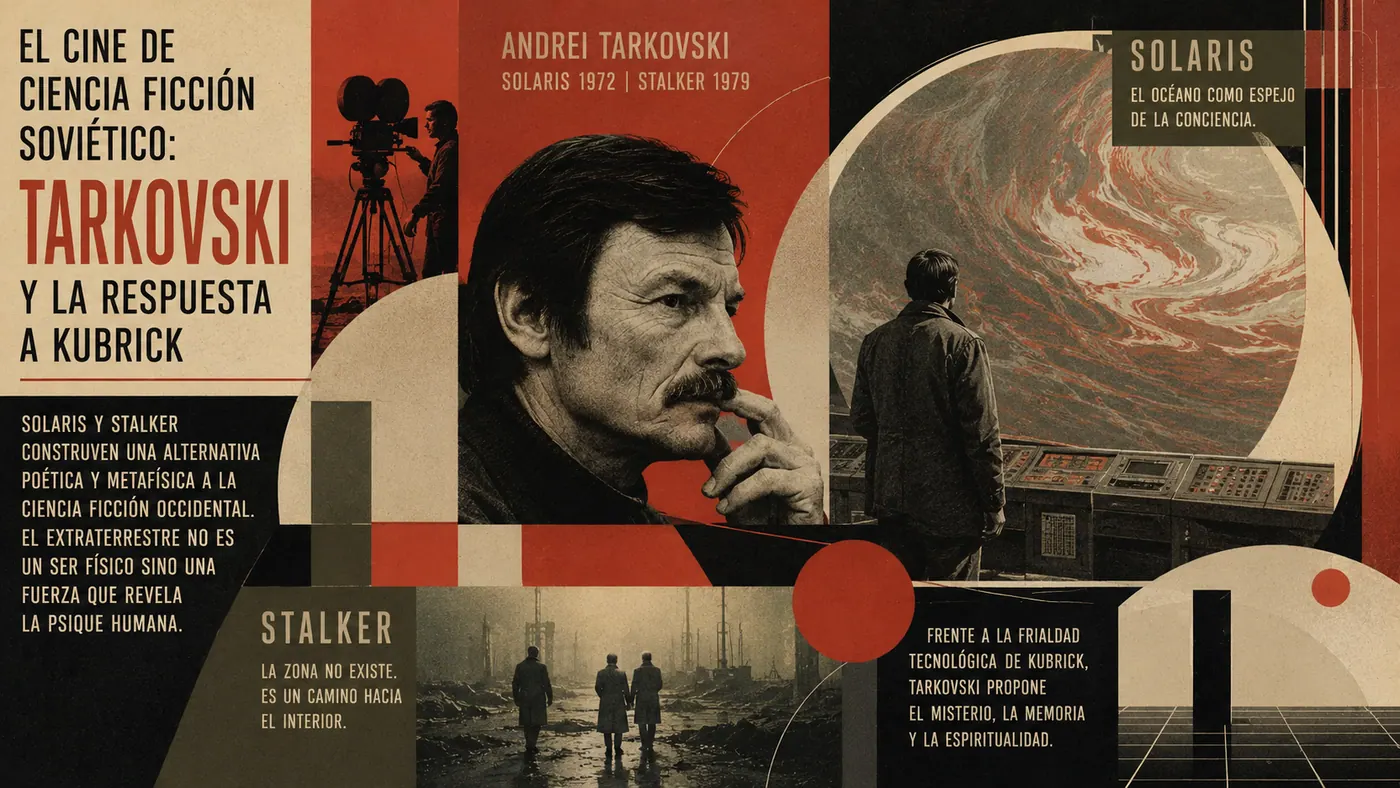
Tarkovsky’s science fiction refuses the triumphalism of technological conquest. In Solaris and Stalker, the unknown is not an external territory to master but a spiritual pressure that exposes the poverty, desire and guilt of those who approach it.
This is why his cinema can be read as an answer to Kubrick. Where 2001 turns contact into evolutionary abstraction, Tarkovsky returns it to memory, faith and suffering. The alien is not a body but a force that makes human beings reveal themselves.
The Soviet context matters because it gives these films a different relation to progress. Space is not simply the future. It is a mirror in which ideology, science and hope lose their certainty.
In that sense, Tarkovsky’s extraterrestrial is radically indirect. It is present through effects: rooms that answer wishes, oceans that resurrect grief, zones that test the soul. The alien is what remains when explanation fails.
Readers
Would you like to comment on this essay or suggest a related reading?
Write to us at info@cinetropo.com.