Article
Star Trek: Humanism for the Galaxy
How Star Trek reshaped the screen alien through humanism, diplomacy and a utopian idea of the future.
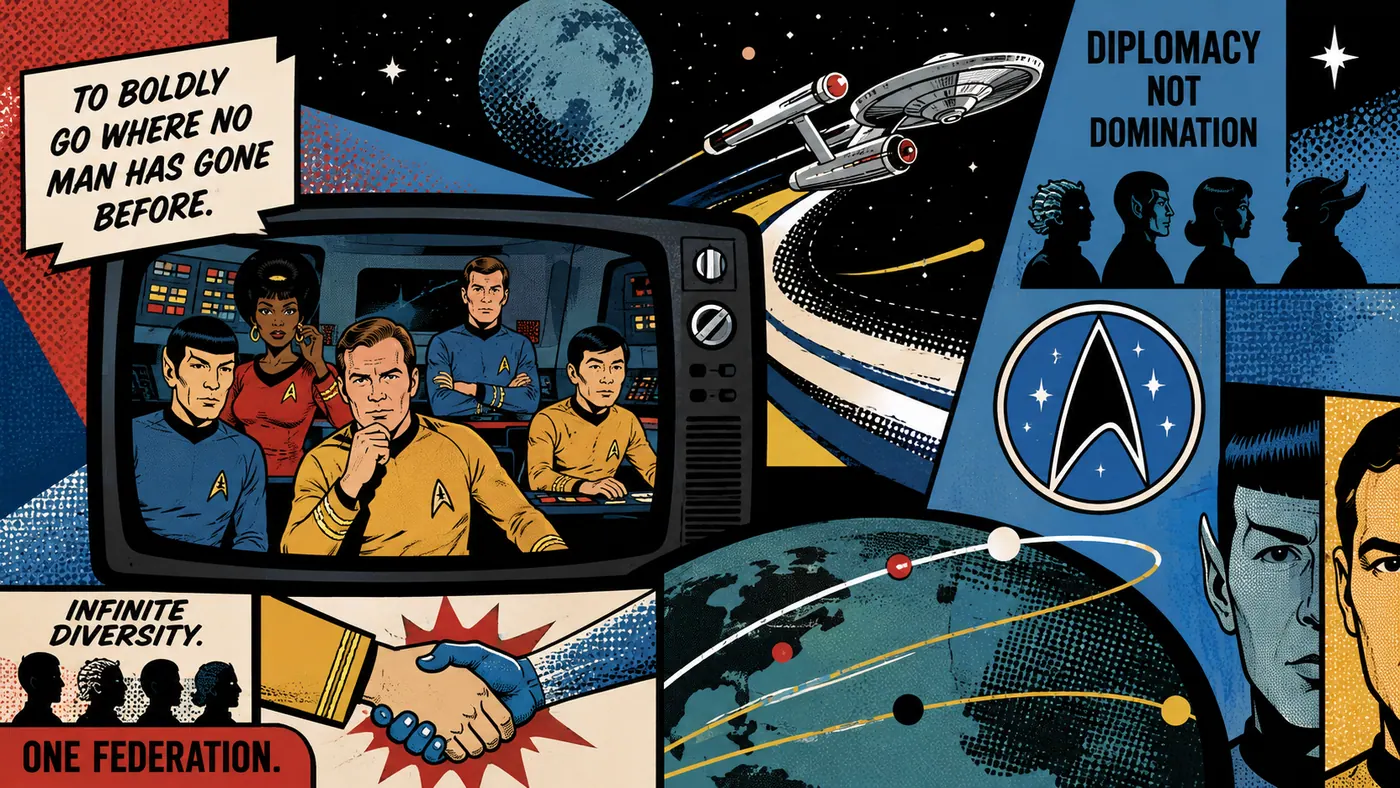
Star Trek transformed the alien from a figure of invasion into a partner in diplomacy. Its universe is not free of conflict, but it imagines conflict as something that can be interpreted, negotiated and sometimes overcome.
The series’ humanism lies in its faith that difference does not have to end in extermination. Vulcans, Klingons, Romulans and countless other species expand the political imagination of science fiction beyond the simple opposition between us and them.
This does not make Star Trek innocent. Its utopia is full of tensions, hierarchies and contradictions. But its central gesture remains important: the future is worth imagining as a community of worlds rather than a battlefield of species.
For Cinetropo, that gesture matters. Galactic diplomacy is not merely a narrative device. It is an ethical fantasy about living with otherness without immediately turning it into threat.
Readers
Would you like to comment on this essay or suggest a related reading?
Write to us at info@cinetropo.com.